Why Water Spots Still Form on Ceramic-Coated Cars
Why Water Spots Still Form on Ceramic-Coated Cars
Water spots on ceramic coating can still develop because the protective layer repels water but does not remove dissolved minerals. When droplets evaporate, mineral deposits may remain on the vehicle's surface, leaving visible spots or rings.
For vehicle owners in Naples, Marco Island, and Fort Myers, FL, sprinkler water, outdoor parking, and frequent sun exposure can contribute to recurring water spots. Understanding what causes these marks and how to remove them safely helps maintain your vehicle's appearance without compromising its protective coating.
How Ceramic Coating Protects Your Vehicle's Paint
Ceramic coating creates a protective layer over the vehicle's clear coat, helping reduce contaminant adhesion, enhance gloss, and simplify routine cleaning. Its hydrophobic properties encourage water to bead and roll off the surface.
However, ceramic coating is not completely resistant to environmental contamination. Water droplets can remain on horizontal panels and evaporate, leaving mineral deposits behind. Water beading may indicate that the surface retains hydrophobic properties, but it does not guarantee protection against water spots.
Ceramic coating also serves a different purpose from
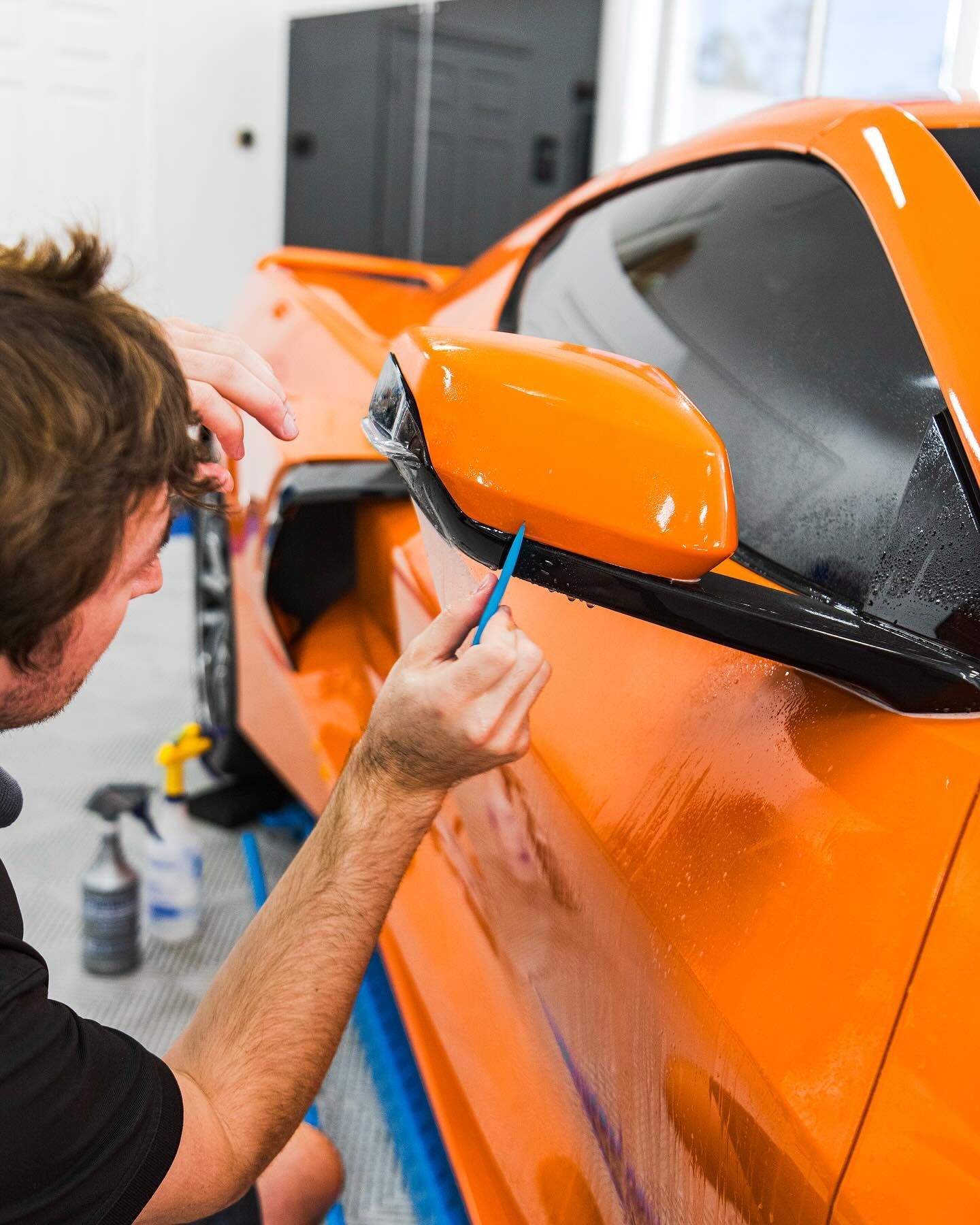
paint protection film (PPF), which provides additional protection against physical impacts and road debris.


What Causes Water Spots on Ceramic Coating?
Water spots form when moisture evaporates and leaves dissolved minerals or other contaminants on the surface. Calcium and magnesium are common minerals associated with hard-water deposits.
Although ceramic coatings help repel water, droplets may collect in concentrated beads. When those droplets dry, the remaining minerals can create noticeable rings or cloudy marks.
The likelihood of spotting depends on water quality, environmental conditions, and how long moisture remains on the vehicle.
Fresh mineral deposits may respond to appropriate cleaning methods. However, prolonged exposure to heat and sunlight can make deposits harder to remove and may contribute to surface etching.
Common Sources of Water Spots in Southwest Florida
Vehicle owners throughout Southwest Florida encounter several conditions that can contribute to water spotting.
Hard Water and Sprinkler Systems
Irrigation systems can repeatedly expose vehicles to mineral-containing water. Depending on the water source, droplets may leave visible deposits after drying.
Washing a vehicle with hard tap water can produce similar results, particularly when rinse water evaporates before the surface is dried.
Rainwater and Environmental Contaminants
Rainwater can collect airborne dust, pollen, and pollutants before reaching your vehicle. Once the moisture evaporates, some contaminants may remain on the coating.
Direct Sunlight and Heat
Warm surfaces accelerate evaporation, increasing the likelihood of visible deposits. Water spots commonly appear on the hood, roof, and trunk because these broad surfaces receive substantial sunlight.
How to Prevent Water Spots on a Ceramic-Coated Car
Consistent washing and drying practices help minimize mineral buildup and maintain the coating's appearance.
- Wash in the shade. Choose a shaded location and allow hot panels to cool before washing.
- Work in sections. Wash and rinse manageable areas to prevent soap and water from drying prematurely.
- Use appropriate rinse water. Deionized water can reduce mineral deposits because most dissolved minerals have been removed.
- Dry the vehicle promptly. Use a clean microfiber drying towel or touchless blower to remove remaining droplets.
- Choose coating-safe products. Use compatible shampoos and maintenance sprays according to the coating manufacturer's recommendations.
- Avoid sprinkler exposure. When possible, park away from irrigation systems that regularly spray nearby vehicles.
These practices are particularly useful for drivers in Naples, Marco Island, and Fort Myers who regularly park outdoors.
For additional maintenance support, Naples Auto Armour offers an Armour Maintenance Plan designed to maintain existing ceramic coatings and paint protection film. The service includes professional washing, appropriate decontamination, and protective maintenance products. Eligible customers can also explore recurring maintenance subscriptions.


Ceramic Coating Curing After Installation
Ceramic coating curing continues after application. During this period, the coating needs time to harden and develop its intended performance.
Follow the installer’s cure-time instructions for the coating used on your vehicle. Avoid unnecessary exposure to rain, sprinklers, washing, or other moisture during the period your installer recommends.
After the initial cure period:
- Wash with a pH-neutral automotive shampoo
- Use clean microfiber wash media
- Remove bird droppings, bugs, and tree sap promptly
- Avoid automatic car washes with brushes
- Watch for changes in gloss or water behavior
Reduced water beading does not automatically mean the coating has failed. Contamination on top of the coating can affect its behavior, and proper decontamination may restore performance.
Ceramic Coating Care in Southwest Florida
Strong sun, heat, humidity, rain, insects, and environmental contamination continue to affect a vehicle after installation. Regular washing helps prevent contaminants from sitting on the surface long enough to become difficult to remove.
Parking in a garage or shaded area when practical can also limit prolonged exposure. For Naples, Marco Island, and Fort Myers drivers, the key takeaway is that coating performance begins before application. Preparation, panel temperature, humidity management, application technique, and curing all work together.
Get Better Results From Ceramic Coating Installation in Hot Weather
Ceramic coating installation in hot weather is not about avoiding Florida’s climate. It is about managing the conditions that affect application and curing.
Naples Auto Armour prepares and installs ceramic coatings with attention to surface condition, panel temperature, humidity, flash time, and final inspection. The team uses XPEL FUSION coating options, while detailed package information is best kept on the dedicated ceramic coating service page instead of duplicating service-page content here.
If you are considering ceramic coating for a vehicle in Naples, Marco Island, Fort Myers, or the surrounding Southwest Florida area,
talk with Naples Auto Armour about your vehicle and protection goals. Review the ceramic coating service page for current package details, coverage, warranty information, and pricing, then request an appointment when you are ready.
Naples Auto Armor Blog